The CSCMP 2025 State of Logistics Report highlights pivotal shifts in the e-commerce landscape. While U.S. e-commerce reached $1.2 trillion in 2024 (and $6.3 trillion globally), parcel volumes grew by a modest 2.2%. Meanwhile, Buy Online, Pick Up in Store (BOPIS) is surging, with a projected annual growth rate of 11.57% through 2028. Combined with intense competition among final-mile carriers, the power has shifted: it is now a shipper’s market.
The Emerging Barbell Effect
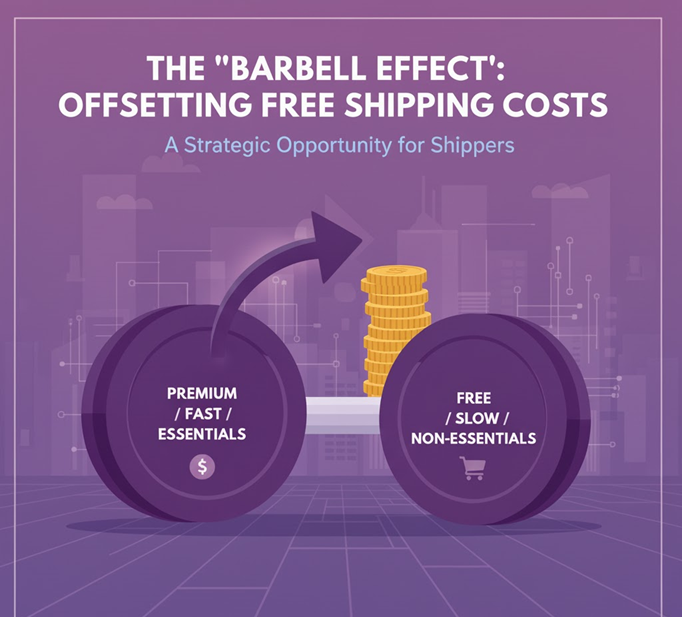
While shippers have more leverage with carriers, the cost of final mile delivery continues to rise and erodes profit margins. Online shoppers have long expected free shipping, but the CSCMP report identified a significant trend in consumer behavior: the "barbell effect". Modern shoppers are bifurcating their expectations:
This shift presents a strategic opening where shippers are now able to effectively upsell marked-up premium delivery options to subsidize the rising costs of "free" shipping and protect their bottom lines.
Driving Margin with Decision Intelligence
Capitalizing on this shift requires more than the traditional “rate shopping” offered by legacy shipping systems. The complexity of deciding how, when, and where to cost-effectively use diversified carriers across an omni-channel fulfillment network is a huge challenge. Next-generation Parcel TMS platforms, like Sendflex, provide the decision intelligence necessary to evaluate complex variables in real-time:
Automation at the Speed of eCommerce
The ability to configure no-code business rules and apply machine learning is no longer a luxury—it is a requirement for continuous cost control and margin improvement. For instance, if historical data reveals a carrier’s ground service consistently reaches a specific zone in one or two days, a shipper can offer (and markup) that service as "Express" rather than paying for a more expensive carrier premium service.
In the digital storefront, speed is the currency of conversion. Relying on slow carrier APIs can lead to cart abandonment. Leading Parcel TMS platforms, such as Sendflex, utilize in-platform optimization engines capable of processing thousands of rate comparisons and business rules per second.