Ask a shipper who writes their parcel routing rules and the honest answer is usually IT, eventually. Someone in operations notices that short-haul orders are going out by air when ground would meet the same delivery promise. They file a ticket. The change waits for a release window. By the time the rule is live, the carrier rates, the volume mix, and the reason for the request have all moved on.
That gap between noticing a problem and fixing it is where parcel margin leaks. Rule Studio closes it. It is the part of the Sendflex platform where the people who understand the business write the rules, test them against real shipments, and put them into production on their own terms, without a development cycle.
We put together a short walkthrough of how it works. The video is at the end of this post. It runs a little over two minutes, and every point is captioned, so it plays fine with the sound off. Here is what it covers.
Rule Studio does not start from a blank configuration screen. It starts from a finding.
Sendflex AI agents continuously read your shipment history, rates, and network performance and surface patterns a person would take weeks to find in a spreadsheet. In the video the finding is a familiar one: a set of orders is moving by express service when ground would deliver on the same date. The agent flags the opportunity, shows how many shipments it touches, and hands it to Rule Studio as the starting point for a rule.
The difference matters. Most routing rules get written because someone had a hunch. These get written because the data already showed where the money is.
A rule in Rule Studio reads the way you would explain it to a colleague. When the customer is Acme and the destination is residential, allow only these three services. When ground meets the promised delivery date, do not pay for air. No scripting, no vendor ticket.
One rule can hold several decisions, and each evaluates independently in order, so a single rule can express a customer agreement, a service restriction, and a cost preference without turning into a tangle.
Rules also act on key metrics Sendflex monitors in real time: on-time performance by carrier and lane, available capacity, the candidate delivery date. That is what turns a cost rule into a protected one. If the promise does not hold, the rule does not fire, and the current choice stands.
This is the step most rule engines skip, and the reason routing changes make operations teams nervous.
Before anything goes live, Rule Studio checks the new rule against real shipments from your own history. You see every condition and whether each one is met. Then it replays the rule across the full shipment set, tens of thousands of shipments in the demo, and returns the result instantly. That speed is not a nice-to-have. Sendflex rates and routes at more than a million rules per second, which is what makes it practical to test a rule against three months of history instead of a handful of sample orders.
Boundary tests show when the rule applies and when it will not. That second half is the important one. A rule that saves money on the shipments it should touch, and leaves alone the ones it should not, is a rule you can defend.
Rules do not go from draft to production in one jump.
Shadow mode runs the rule against each live shipment and records what it would have decided, while the live shipment goes out untouched. You watch the proposed decisions accumulate against real volume with zero risk to service.
When the results hold up, you widen the deployment the way you choose: a share of shipments, the ship-from locations you pick, and eventually everything. Rollback is a setting, not a project.
Every rule in Rule Studio is navigable as a map, so you can see how a shipment moves through the rules in the order they are applied.
The video walks a single shipment through step by step. The order asks for a priority service and the first rule translates that into a specific carrier service. The next rule checks the customer agreement and narrows the options to the three allowed services. The next confirms that the candidate delivery date still meets the promise. Each check is shown in sequence, with the outcome.
The result is an audit record for every optimization decision. When someone asks why a package shipped the way it did, the answer is on screen, not in a black box. For a 3PL answering a customer, or a shipper answering finance, that is the difference between explaining a decision and defending one.
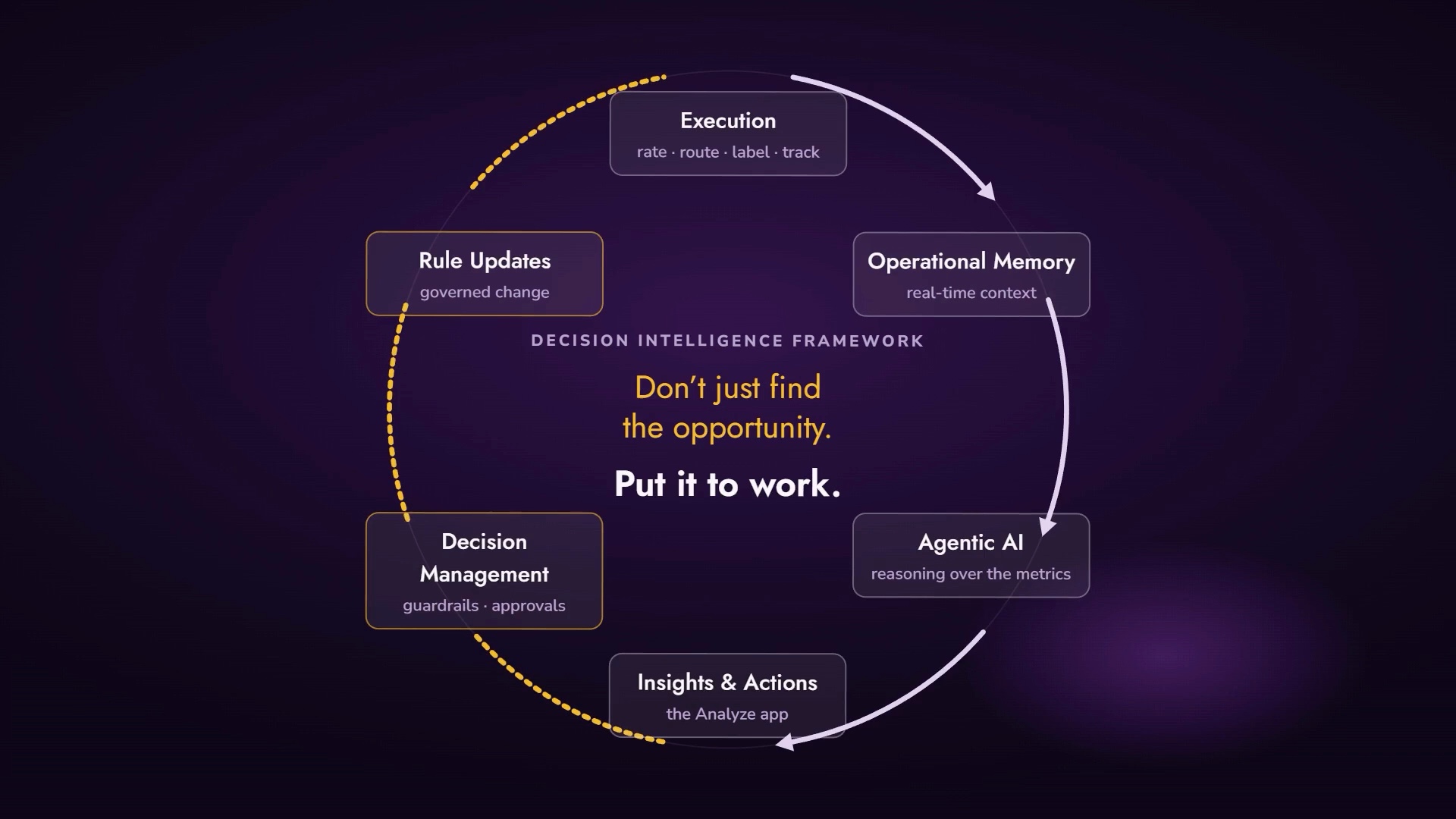
Insight leads to a rule. The rule leads to an action. The action produces evidence. The evidence feeds the next insight.
That loop is what most shipping software is missing. Label printing gets a package out the door today. Analytics tell you what last quarter cost. Rule Studio sits between them and turns what you learn into what you do, with proof at every step.
The question is not whether your team knows where the routing waste is. It usually does. The question is how long it takes to act on it, and how much confidence you have when you do.
Rule Studio puts the rule in the hands of the people who own the outcome. They write it in plain language, prove it against real shipments, deploy it in shadow before it touches a single package, and show their work afterward. Intelligence, under your control.
Watch the walkthrough below. It is captioned, so no sound needed.
Want to see Rule Studio on your own shipment data? We will run it against your order and shipment history and show you what would have changed. Request a demo.